

Un peu d'histoire ...
Japanese calligraphy has its roots in Chinese calligraphy, following the introduction of Chinese characters to Japan.
Because of this shared heritage, the two traditions have many techniques and aesthetic principles in common, while each has also developed its own distinctive characteristics over time.
In the following sections, you will discover some of the main script styles and the essential tools used in Japanese calligraphy.
楷書 (Regular script)
Kaisho is the most basic and essential script in Japanese calligraphy. Its clear, well-defined strokes make it easy to read and understand, making it the ideal starting point for beginners and the foundation of all calligraphic practice.
KAISHO

行書 (Semi-cursive script)
Gyōsho is a semi-cursive script characterized by its flowing and elegant movement. More relaxed than Kaisho, it allows the brush to move with greater freedom while preserving the legibility of the characters. This balance between structure and expression makes Gyōsho one of the most popular styles in Japanese calligraphy.
GyÔSHO

草書 (Cursive script)
Sōsho is the most free-flowing and artistic script in Japanese calligraphy. Characters are often simplified to their essence, with strokes merging into a continuous movement of the brush. More than a writing style, Sōsho is a form of artistic expression that captures the energy, emotion, and personality of the calligrapher.
SÔSHO

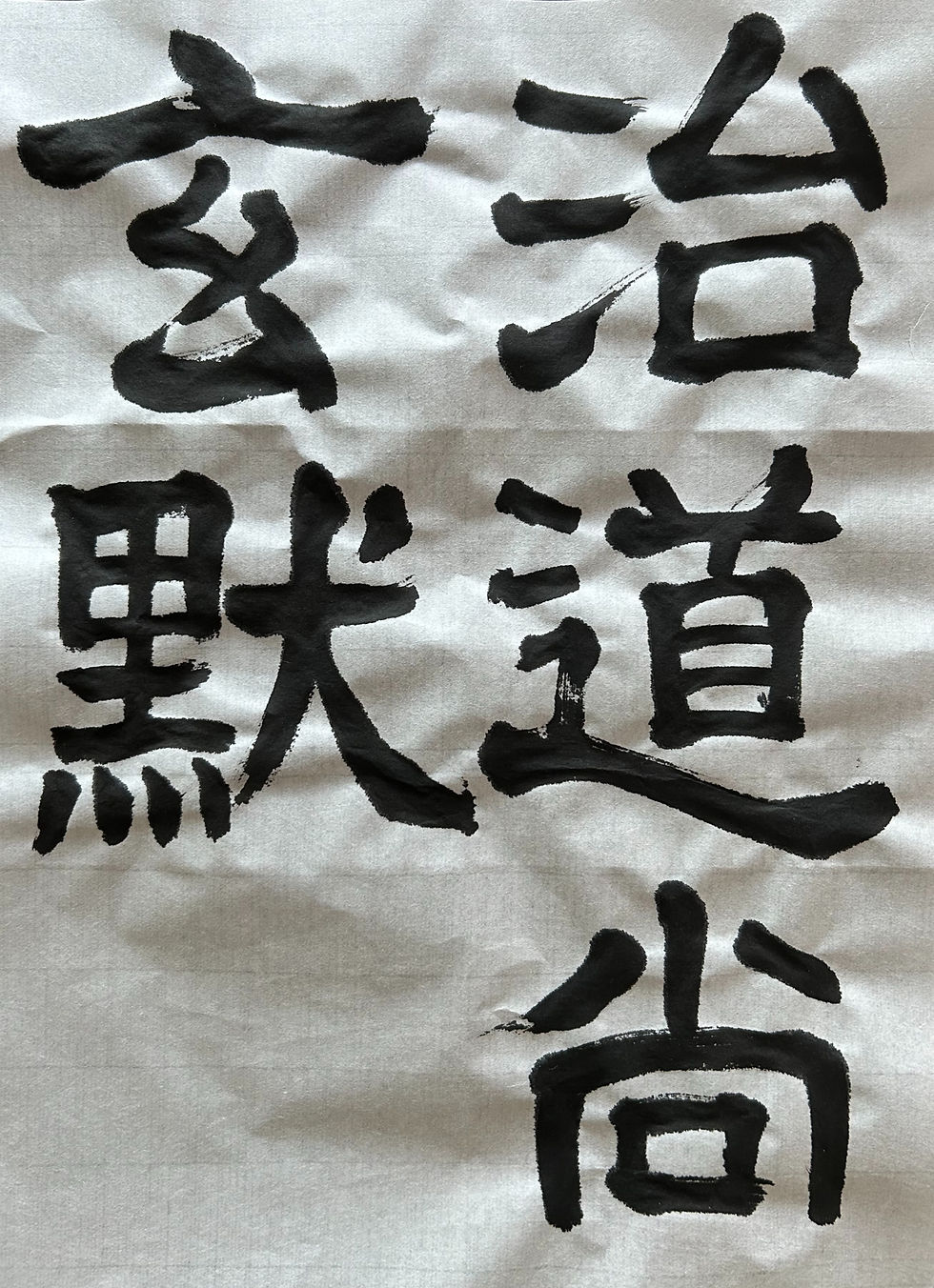
隷書 (Clerical script)
Reisho is a classical script known for its graceful horizontal strokes and distinctive wave-like brush movements. Originating in ancient China, it reflects the elegance and discipline of early calligraphic traditions. Its unique rhythm and decorative beauty continue to inspire calligraphers today.
Reisho
かな (Kana script)
When Chinese characters were introduced to Japan, literacy and official writing were largely associated with men, who used Kanji for government records and formal documents. Over time, women at the imperial court developed a more flowing and simplified writing system inspired by those Chinese characters.
This script eventually evolved into what we now know as "Hiragana".
Kana calligraphy is based primarily on hiragana, although classical texts often combine both Kanji and kana. Many hiragana characters originated from the cursive simplification of Chinese characters. For example, the hiragana character no (の) is derived from the cursive form of the Kanji 乃.
One of the most distinctive features of kana calligraphy is its graceful, flowing movement. Characters are often connected in a continuous rhythm, creating elegant lines that seem to dance across the paper. To achieve these delicate expressions, calligraphers traditionally use a fine brush and thin, highly absorbent paper.
KANA

墨 (Inkstick)
Sumi is the traditional ink used in Japanese calligraphy. Made from soot and natural binders, it comes in the form of a solid inkstick that is ground by hand on an inkstone (suzuri) with water.
More than a simple preparation, grinding sumi is often regarded as a meditative ritual. The calligrapher gradually creates the desired ink, adjusting its density and tone according to the needs of the work.
The resulting range of blacks and subtle gray nuances contributes greatly to the beauty and expressive power of Japanese calligraphy.
SUMI
